4/30/2011

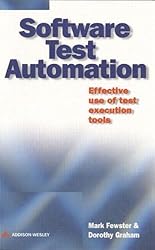
Software Test Automation Review

Software Test Automation
Average Reviews:

(More customer reviews)
Book review
Mark Fewster and Dorothy Graham Software Test Automation Addison Wesley, 1999 ISBN 0-201-33140-3
A book for beginners in test automation. Everything you always wanted to know about test automation, but never dared to ask, and the tool suppliers probably wonÕt tell you.
This book is a must for every serious test manager. It is not only about automation. It is really about test architecture and test suite design. Most other books are about how to design test cases, or how to manage testing. This book is about designing the whole stuff into such a form that you can maintain it, that it will survice maintenance, and that you can automate it. The background is test automation. Many examples show the testware design pitfalls in building automated tests. But it hit me how useful the book is to any testing effort, even manual testing.
The book has two parts. Part 1 is a detailed guide to designing automated (or not totally automated) tests. Questions of selecting and introducing test tools are also discussed. Part 2 contains 15 guest chapters, written by people who have experience in test automation, sharing their experience. These chapters vary in style and are rather short.
There is a readers guide, It shows what te read if you have different intentions and know more or less from before.
Overview of part 1, the Test Automation Design Part.
Chapter 1 gives the context of test automation. It places the different tools into a test model and warns us of naive belief in and application of automation.
Chapter 2 shows the results of capture and playback. At the end of this chapter, the reader will have understood the limited scope of application of this. Problems with script robustness and automatic results comparison are shown.
From chapter 3, the focus changes to scripting. The chapter presents the five levels of generating test scripts, from linear through structures, shared, data-driven to keyword based. The reader will soon see that investment in scripting can pay off. The benefits of data driven or keyword driven testing are clearly shown. The only negative comment is that keyword driven testing, the most advanced and modern approach, is not shown to the same detail as the other techniques. However, these techniques are presented by authors of methodologies and real users in chapters 22 to 25.
Chapter 4 shows the practical details of automated verification of test results. There are lots of methods and pitfalls. The main possibilities are dynamic verification (during running the tests) and static verification (afterwards. The other option is how much to verify. In principle, everything may be interesting. But this costs both work time, maintenance effort, storage, and makes tests less robust and more proine to maintenance. An interesting alternative is to design a broad smoke test where as much as possible is captures and verified, and then a large main test, where every test only vewwrifies its main objective. The authors also show different methods for comparing ÒexoticÓ output. One objection is the shallow section on testing embedded systems. At least for telecom systems, but also other ÒstandardÓ technical interfaces, lots of commercial tools exist that can be used to verify output in a problem oriented and intelligent way. There should also be some more mention about verifying time correctness of system outputs. There might also be some more focus on the use of check sums, statistical selection out of large amounts of data etc.
Chapter 5 shows a possible architecture of the test set. This chapter applies just as well to manual as to automated testing. It fills a hole in IEEE Standard 829, namely proposition as to how to structure the detailed test material, the scripts, input data, utilities, expected results, and actual results, togehter with all other information. The main idea behind the proposed directory structure and naming conventions is to make it easy to maintain and find through. It should also be easry to copy any needed test sets to a platform where they are needed.
There could be more different approaches, naturally, but the presented approach would work well and scale up. There could also be a cross reference to what IEEE 829 contains, and some example about how to use internet technology to document test structure, but all this is of minor disadvantage. This chapter is valuable to anyone who needs to structure test material.
Chapter 5 and 6 are a bit special, as they are as useful for automated, as for nonautomated testing. They concern the structure of the testing material, all the invoilved files, and the preprocessing and postprocessing. These chapters fill a hole in IEEE Standard 829, where no consideration is given to the practical details of building up and maintaining test material. A tool independent structure is given, and advice about how to connect the material with tools. Chapter 6 is an eye opener to the naive user of test automation tools: Preprocessing and postprocessing tasks must be automated, but are not in the scope of the commercial tools.
Chapter 7 presents other issues about test suite maintenance and maintainability. This is somehow good old material and knowledge. It one uses the good old rules for structured design and programing, and scheduled cleaning up of programs, the same could be applied to test amintenance and test material standards. Chapter 7 serves as a useful reminder about what you think you already knew, but maybe forgot in the concrete case.
Chapter 8 gives ideas about how to measure both testing and automated testing. For a metrics fan, this chapter is too short. It only outlines lots of examples of what can be done and why, but does not go into detail. On the other hand, there is enough literature elsewhere about this. Many of the proposed measurements are not very precise, but good advice to Çthe poor manÈ who has not measured much and has to fight for any resources to measure anything. The idea is: Anything which is of interest can be made measurable in some way, maybe not the ideal way and maybe not precisely. But any measurement is better than none. The chapter does a useful job in that respect.
Chapter 9 is a collection of points that have no natural place elsewhere. It includes short discussions on what to automate and what not, how to select tests, the order of running them, tricks to minimize time for failure analysis, deciding the status of a test. Most of the points are well known and not discussed in much detail. A good section is about test status, where the authors present some good ideas about how to handle known bugs in the products that are not going to be fixed for a while (and failed tests for such bugs).
Chapter 10 and 11 concern selecting and introducing a test tool. Much of these chapters are general and could be read by anyone having to select and implement any software tool. What I am missing here is more specific information about concrete test automation tool features to ask for. The general questions to tool vendors are useful, but more concrete advice special for test automation tools is lacking. A few concrete references to test tool functionality overviews would have been helpful here.
In all, I found part 1 very useful, and well worth the time spent reading.
Part 2 is different. There are case studies about successful introduction of test automation, the problems solved, the benfits achieved, and the difficulties met. Chapter 12 to 18, as well as 20, 21, 23 and 25 to 28 are about successful cases. Most of these are short and regrettably general in nature. Not easy to read concrete advice for your own situation. The most interesting one was chapter 28, describing seveal unexpected uses of automated tests at Microsoft. Chapter 19 is a study about test automation failures, and this is useful. Probably it is always more easy to learn from failures. Chapters 20 and 22 are very special, they both describe keyword driven test automation design methods. Chapter 20 is about the action word method, now called TestFrame, by Hans Buwalda from CMG, whereas chapter 22 is about RadSTAR. Both chapters are useful, as they describe the most modern approach to maintainable test design. However, chapter 22 could be more detailed.
In all, I found less use for part 2 of the book, probably because I have heard some of the stories before, at conferences. It may be different to a person new to the field. I was missing more case studies about atuomated tests of other than business systems. There is a lot of automation to be done in this field, and very often there is no alternaitve to automated testing.
In all: Buy the book. In the worst case, chapters 5 and 6 only create benetitfs enough to make it worth the money.
Hans Schaefer

Click Here to see more reviews about: Software Test Automation


Buy NowGet 18% OFF

Buy cheap Software Test Automation now.
4/29/2011

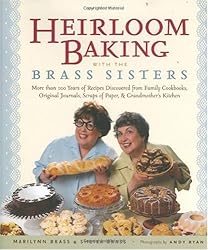
Heirloom Baking with the Brass Sisters: More than 100 Years of Recipes Discovered from Family Cookbooks, Original Journals, Scraps of Paper, and Grandmother's Kitchen Review

Heirloom Baking with the Brass Sisters: More than 100 Years of Recipes Discovered from Family Cookbooks, Original Journals, Scraps of Paper, and Grandmother's Kitchen
Average Reviews:

(More customer reviews)
I read a lot, have far more cookbooks than anyone would ever need, and have purchased books from Amazon for years, but I have never before felt so moved by a book that I just had to write a review. So, here is my first review.
These recipes are astoundling. Easy to make with ingredients on hand. Delicious. But more than all that, this is a wonderful cookbook to simply sit and enjoy. You can open it anywhere and find both a good recipe and relaxing insights into times gone by. The sisters who wrote the book love to bake, and that love shows up in each page, in the beautiful photos and in the nostalgic way the sisters speak of the women who, in cooking for their families, developed these recipes over decades past.
The recipes here, while based in days gone by, have all been updated for today's kitchen and are based in modern ingredients that are easy to find in any supermarket.
As anyone who bakes knows, baking is a science as well as an art, and the underlying chemistry is key to a successful outcome. In the first pages of the book, the sisters discuss the secrets that really good bakers know. Butter should not be salted, but sweet. Eggs should be at room temperature. etc. If you have ever wondered why you followed a baking recipe perfectly and the results were less than perfect, you will probably find your answer here.
So, get the cookbook to learn to bake. Get the cookbook for its simple, delicious recipes. Get the cookbook as a gift for someone you love. But most of all, get the cookbook for a relaxing glimpse of the world of our mothers and grandmothers. This is a wonderful, wonderful book.

Click Here to see more reviews about: Heirloom Baking with the Brass Sisters: More than 100 Years of Recipes Discovered from Family Cookbooks, Original Journals, Scraps of Paper, and Grandmother's Kitchen

FINALIST FOR A JAMES BEARD AWARD IN THE BAKING/DESSERT CATEGORYWe all have fond memories of a favorite dessert our grandmother or mother used to bake. It’s these dishes that give us comfort in times of stress, help us celebrate special occasions, and remind us of the person who used to bake for us those many years ago. In Heirloom Baking, Marilynn Brass and Sheila Brass preserve and update 150 of these beloved desserts. The recipes are taken from their vast collection of antique manuscript cookbooks, handwritten recipes passed down through the generations that they’ve amassed over twenty years. The recipes range from the late 1800s to today, and come from a variety of ethnicities and regions. The book features such down-home and delicious recipes as Brandied Raisin Teacakes, Cuban Flan, Cranberry-Orange Cream Scones, Chattanooga Chocolate Peanut Butter Bars, and many more. Accompanying the recipes are stories from the lives of the families from which they came. The Brass Sisters have taken care to update every recipe for today’s modern kitchens. More than 150 photographs showcase the scrumptious food in full-color detail. Finally, the Brass sisters encourage each reader to begin collecting his or her own family recipes in the lined pages and envelope at the back of the book.

Buy NowGet 34% OFF

Buy cheap Heirloom Baking with the Brass Sisters: More than 100 Years of Recipes Discovered from Family Cookbooks, Original Journals, Scraps of Paper, and Grandmother's Kitchen now.

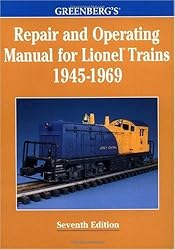
Greenberg's Repair and Operating Manual for Lionel Trains, 1945-1969 (Greenberg's Repair and Operating Manuals) Review

Greenberg's Repair and Operating Manual for Lionel Trains, 1945-1969 (Greenberg's Repair and Operating Manuals)
Average Reviews:

(More customer reviews)
This book has become one of my standard references for repair, restoration and operation. It is easy to understand, has great diagrams, and covers most Lionel pieces for this period. It is also valuable as a reference for operating those pieces with missing instructions! I highly recommend this book to anyone from beginner to pro with an interest in old Lionel.

Click Here to see more reviews about: Greenberg's Repair and Operating Manual for Lionel Trains, 1945-1969 (Greenberg's Repair and Operating Manuals)

Offers over a thousand repair and maintenance tips for Lionel locomotives, operating cars, accessories, transformers, light bulbs, and switches.Provides original Lionel technical advice and handy techniques submitted by toy train collectors and operators over the past ten years.

Buy NowGet 34% OFF

Buy cheap Greenberg's Repair and Operating Manual for Lionel Trains, 1945-1969 (Greenberg's Repair and Operating Manuals) now.

4/28/2011

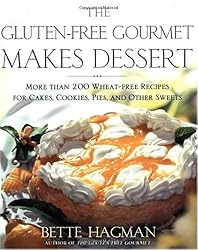
The Gluten-free Gourmet Makes Dessert: More Than 200 Wheat-free Recipes for Cakes, Cookies, Pies and Other Sweets Review

The Gluten-free Gourmet Makes Dessert: More Than 200 Wheat-free Recipes for Cakes, Cookies, Pies and Other Sweets
Average Reviews:

(More customer reviews)
Those of us following a gluten-free diet often feel something akin to claustrophobia when it comes to food. Every day we're faced with so many goodies that we can't have. It's a great comfort to have a resource like this one at home when you walk past the bakery section of your local grocery store. Just knowing you *can* go home and bake something sweet and tasty
opens up your world a little.
And these recipes do work; some are complex, many are very simple, which means the book answers a range of cook's skills.
While it is true that the recipes are based on mixes made from a wide range of sometimes exotic flours -- usually available through an American health food store -- it's not fair to condemn any of Bette's books for this. You're just not likely to find most gluten-free flours for cheap in your grocery store, at least not this early in the millennium.
My 11-year-old daughter has adopted this book as her kitchen companion. She turned out a wonderful cake on her first try. For those of you with children stuck with a gluten-free diet for life, there is no more essential skill to pass on to them than cooking -- and no better passion than a love of cooking -- that will support them through a lifetime on a specialized diet. This book makes a great starting place for cooking with kids, as well as being a suitable cookbook for adults of all skill levels.

Click Here to see more reviews about: The Gluten-free Gourmet Makes Dessert: More Than 200 Wheat-free Recipes for Cakes, Cookies, Pies and Other Sweets


Buy NowGet 42% OFF

Buy cheap The Gluten-free Gourmet Makes Dessert: More Than 200 Wheat-free Recipes for Cakes, Cookies, Pies and Other Sweets now.

4/27/2011

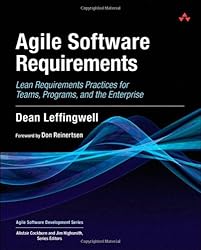
Agile Software Requirements: Lean Requirements Practices for Teams, Programs, and the Enterprise (Agile Software Development Series) Review

Agile Software Requirements: Lean Requirements Practices for Teams, Programs, and the Enterprise (Agile Software Development Series)
Average Reviews:

(More customer reviews)
This is an outstanding contribution to those serious about scaling and improving their agile development team and environment. Being an agile practitioner for 7 years, I have come to understand that different aspects of the process can be drag to getting superior product out on time. Leffingwell book takes these on clarity of the issues and what are expectations. I particularly like his treatment of the product manager's role and how it must change to run with an agile team. This is hard hitting, and often personal stuff, but it goes right to a problem that many teams have in getting the right features to the market. I am encouraging all PM's in my company to read Dean's book and betting our delivery will improve in many ways. Again, a real contribution along many lines and I encourage all to practitioners to pick this one up.

Click Here to see more reviews about: Agile Software Requirements: Lean Requirements Practices for Teams, Programs, and the Enterprise (Agile Software Development Series)

“We need better approaches to understanding and managing software requirements, and Dean provides them in this book. He draws ideas from three very useful intellectual pools: classical management practices, Agile methods, and lean product development. By combining the strengths of these three approaches, he has produced something that works better than any one in isolation.”–From the Foreword by Don Reinertsen, President of Reinertsen & Associates; author of Managing the Design Factory; and leading expert on rapid product developmentEffective requirements discovery and analysis is a critical best practice for serious application development. Until now, however, requirements and Agile methods have rarely coexisted peacefully. For many enterprises considering Agile approaches, the absence of effective and scalable Agile requirements processes has been a showstopper for Agile adoption. In Agile Software Requirements, Dean Leffingwell shows exactly how to create effective requirements in Agile environments. Part I presents the “big picture” of Agile requirements in the enterprise, and describes an overall process model for Agile requirements at the project team, program, and portfolio levels

Buy NowGet 24% OFF

Buy cheap Agile Software Requirements: Lean Requirements Practices for Teams, Programs, and the Enterprise (Agile Software Development Series) now.

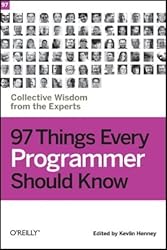
97 Things Every Programmer Should Know: Collective Wisdom from the Experts Review

97 Things Every Programmer Should Know: Collective Wisdom from the Experts
Average Reviews:

(More customer reviews)
I have read programming books for years. There was a time when I could write a "Hello World" program in each of seven or eight languages. That time has passed, mainly because I haven't been intimately involved in any specific software project for many years. Still, I have this habit of reading programming books and enjoying them, perhaps in the hope or expectation that one of these days I'll find myself with a project in front of me, time to work on it, and motivation to learn a new language or tool to make the project's vision a reality. Well, here's the newest book of programming foundational tips that I have read.
97 Things Every Programmer Should Know is a collection of short, two page essays, each by an experienced programmer. The book is a collection of tips and tricks for writing code that works, that is maintainable both by the author and by others, and that will best fit the situation. While the book doesn't measure up to some of my all time favorites in the genre like The Art of Unix Programming or The Pragmatic Programmer, it wasn't meant to. This is not an in depth guide to underlying philosophies of coding practices and standards, but quick hit and run articles that would be easy to fully grasp and absorb in short five minute bursts, such as during work or study breaks (which is how I read the book).
Some of the topics included in this book will seem obvious such as "Don't Ignore That Error" and "Comment Only What The Code Cannot Say," and some tips are going to serve only as reminders to best practices that are sometimes ignored (to our own peril) like "Check Your Code First Before Looking To Blame Others" and "Make Interfaces Easy To Use Correctly And Difficult To Use Incorrectly," there are some real gems in the book that aren't so obvious like one author's instruction to "Read the Humanities" because they are a great tool to help programmers learn to effectively interact with people and not just software and the advice that says "Don't Just Learn the Language, Understand Its Culture" so that you will write effectively and idiomatically within each language, rather than writing the same thing using different words.
I can't say that this is a must-have book for experienced programmers, but anyone at the novice to intermediate levels would certainly benefit from what the book contains. I've enjoyed reading it.

Click Here to see more reviews about: 97 Things Every Programmer Should Know: Collective Wisdom from the Experts


Tap into the wisdom of experts to learn what every programmer should know, no matter what language you use. With the 97 short and extremely useful tips for programmers in this book, you'll expand your skills by adopting new approaches to old problems, learning appropriate best practices, and honing your craft through sound advice.

With contributions from some of the most experienced and respected practitioners in the industry--including Michael Feathers, Pete Goodliffe, Diomidis Spinellis, Cay Horstmann, Verity Stob, and many more--this book contains practical knowledge and principles that you can apply to all kinds of projects.

A few of the 97 things you should know:

"Code in the Language of the Domain" by Dan North
"Write Tests for People" by Gerard Meszaros
"Convenience Is Not an -ility" by Gregor Hohpe
"Know Your IDE" by Heinz Kabutz
"A Message to the Future" by Linda Rising
"The Boy Scout Rule" by Robert C. Martin (Uncle Bob)
"Beware the Share" by Udi Dahan


Buy NowGet 35% OFF

Buy cheap 97 Things Every Programmer Should Know: Collective Wisdom from the Experts now.

4/26/2011

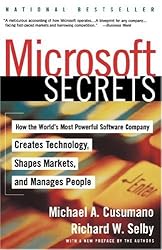
Microsoft Secrets: How the World's Most Powerful Software Company Creates Technology, Shapes Markets and Manages People Review

Microsoft Secrets: How the World's Most Powerful Software Company Creates Technology, Shapes Markets and Manages People
Average Reviews:

(More customer reviews)
The authors definitely did a fine work by doing excellent research about Microsoft's product development and marketing. This book would prove to be very helpful to those who are coming from a non-technical perspective. It occasionally offers some valuable insights into Microsoft's strategies but it is quite dry for the most part even for a person who has plenty experiences in software development. The Microsoft 'secrets' are not exactly impressive. It would be impossible to know the true secret in a book, otherwise every software company would become a Microsoft (then again, not every company wants to). The book is a bit dated, but nevertheless offers the curious reader some insights into the development and marketing of Microsoft's past successful (and unsuccessful) moves. This book made Microsoft seems to be more fallible than its invincible image of every day praise.

Click Here to see more reviews about: Microsoft Secrets: How the World's Most Powerful Software Company Creates Technology, Shapes Markets and Manages People


Buy NowGet 32% OFF

Buy cheap Microsoft Secrets: How the World's Most Powerful Software Company Creates Technology, Shapes Markets and Manages People now.

4/25/2011

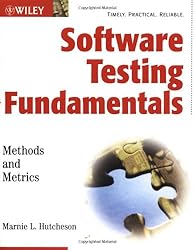
Software Testing Fundamentals: Methods and Metrics Review

Software Testing Fundamentals: Methods and Metrics
Average Reviews:

(More customer reviews)
Traditional software testing focuses two key metrics - defect removal efficiency and, in mature environments, defect density. This book takes a different approach that, on first read, may seem like anarchy to experienced test professionals who work on internal projects. However, when you stop and consider the context in which Ms. Hutcheson is using, the methods and metrics she sets forth make perfect sense.
The context is delivery of commercial products or getting company-critical applications rolled out for purposes of competitive advantage. Within this context she defines the following goals: (1) first to market with the product, (2) optimum pricing model, (3) products with the right features, (4) keeping unacceptable bugs to an absolute minimum. For the last she has a corollary, "Make sure your bugs are less expensive and less irritating than your competitor's", which is not the 'party line' in testing, especially in organizations that strive for zero defects, but is realistic, and especially so when time-to-market is critical. In some ways this book reflects software testing in marketing-driven product development. This is further reinforced by the following definitions and objectives:
- definition of quality is customer satisfaction.
- system for achieving quality is constant refinement.
- measure of quality is the profit.
- target goal of the quality process is a hit every time.
Achieving the above within the software testing domain does require a departure from conventional thinking and methods, and how to go about achieving them is thoroughly covered in the body of the book. The key approach is to develop a test strategy that is based on 'Most Important Tests'. Supporting activities covered include building a test inventory, managing risk, and a feedback loop of data analysis.
In addition to being aligned to product line development, this book's approach can also be easily tailored to rapid, iterative development approaches such as agile methods. If you are working in an internal development environment that uses 'heavier' development lifecycles this book is not going to fit; however, if you work in a product-oriented environment this book will not only change your thinking, but will provide the basis for an integrated development-marketing approach that could make a real difference in competitive advantage.

Click Here to see more reviews about: Software Testing Fundamentals: Methods and Metrics


Buy NowGet 34% OFF

Buy cheap Software Testing Fundamentals: Methods and Metrics now.

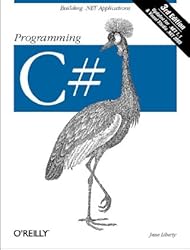
Programming C#: Building .NET Applications with C# Review

Programming C#: Building .NET Applications with C#
Average Reviews:

(More customer reviews)
Direct and Intuitive...these are my two words to describe this book. Jesse has exceeded an already high O'Reilly standard with this offering.
I have a basic web background (HTML, XML, JavaScript, CSS, Graphics) and was looking for the one (hopefully) book to help me catch on to C# and the many advanced object oriented concepts that come along with it.
Jesse knows exactly what the object oriented newbie is going to ask, and lets you know exactly what is happening. He knows what will confuse you (me), and clarifies IMMEDIATELY. Having this kind of foresight makes it possible to read this book cover to cover without jumping back to re-learn something that was explained poorly in the first place. The layout in this book is top-shelf.
As C# is completely dependent on the .NET Base Class Libraries, any text on the matter is incomplete without examples of and references to Windows and Web Forms. This book covers Windows Forms, Web forms, Web Services and ADO.NET. (The ADO.NET section is OUTSTANDING)
(If you are ever in doubt about an O'Reilly book, they have the table of contents listed for every item at their site)
I have yet to find a more efficient and easy to read text. Every time I think O'Reilly can't do any better, they come up with something like this.
Your money is well spent here.

Click Here to see more reviews about: Programming C#: Building .NET Applications with C#


Buy NowGet 34% OFF

Buy cheap Programming C#: Building .NET Applications with C# now.

4/24/2011

Mad About Muffins: A Cookbook for Muffin Lovers Review

Mad About Muffins: A Cookbook for Muffin Lovers
Average Reviews:

(More customer reviews)
I ordered this book and didn't open it until I had a bridal shower to go to. I remembered it on the shelf and sat down to look it over. What a feast for the eyes and what a bunch of mouth-watering recipes! I have ordered two more, one for myself and one for my daughter's hope chest.
The colored pencil drawings that accompany every single recipe are gorgeous. The author became interested in making her own muffins when a favorite bakery near her work went out of business.
The recipes are divided into categories such as those with fruits added, those with even vegetables and herbs, muffins to fit almost any occasion or food combination.
When my checkbook recuperates from the 3 copies I just bought, I plan to keep one on hand and give it as a gift along with a nice muffin tin, a mixing bowl, rubber spatula, etc.
This book is lovely and I'm looking forward to seeing the author's book on soups. bon appetite!

Click Here to see more reviews about: Mad About Muffins: A Cookbook for Muffin Lovers

Includes over 100 recipes for such muffins as honey bran, fruity oatmeal, mint chocolate chip, tunnelfudge, apple cheesecake, banana chocolate, peanut butter & jelly, bacon brown sugar, orange rum, and wine & cheese.

Buy Now

Buy cheap Mad About Muffins: A Cookbook for Muffin Lovers now.

4/23/2011

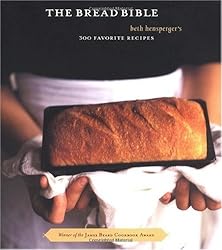
The Bread Bible: 300 Favorite Recipes Review

The Bread Bible: 300 Favorite Recipes
Average Reviews:

(More customer reviews)
This book is just wonderful! I have been baking bread by hand for several years now and have thouroughly enjoyed it, but this book has helped me to stretch beyond the recipe and try some new things. In the past 2 weeks, I think I have made 7 recipes out of this book. I just can't seem to stop. The Bulgur Oatmeal bread, I think, is the best bread I have ever tasted. Absolutely AMAZING! I also made the Sesame Burger Buns, Whole Wheat Long Rolls, Vienna Bread, Pain Campagne and Farm-Style White Bread with Cardamom. I have probably 200 cookbooks and this is my new favorite! A must read!

Click Here to see more reviews about: The Bread Bible: 300 Favorite Recipes

The Bread Bible is the one book on the subject no kitchen should be without -- and now it's available in paperback. A trusted authority on baking, Beth Hensperger has brought together hundreds of time-tested recipes, both classic and intriguingly original, from Gruyere Pullman Loaf and Farm-Style White Bread with Cardamom to fragrant Tuscan Peasant Bread and Classic Buttermilk Biscuits. And don't just think loaves. Steamed Pecan Corn Bread, pancakes, golden brioches, flatbreads, focaccia, pizza dough, dinner rolls, dessert breads, strudels, breakfast buns -- the choices are endless. The recipes are foolproof, step-by-step, and easy-to-follow. Busy bakers will also appreciate the excellent selection of recipes for bread machines and food processors. With a glossary and easy-to follow tips such as how to store and reheat bread, The Bread Bible is "a keeper for anyone who likes to bake or plans to get started." -Chicago Tribune

Buy NowGet 32% OFF

Buy cheap The Bread Bible: 300 Favorite Recipes now.

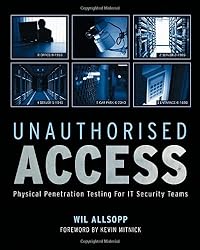
Unauthorised Access: Physical Penetration Testing For IT Security Teams Review

Unauthorised Access: Physical Penetration Testing For IT Security Teams
Average Reviews:

(More customer reviews)
As the author notes several times throughout the book, this work is not exhaustive on any one subject. It does, however, provide a very nice overview of penetration testing as a whole. It covers several aspects that I wouldn't have thought of.
As a systems administrator, I bought this book to get some ideas about weak points in our network/physical security. After reading through some of the examples and case studies, I have made some changes that I think will go a long way in beefing up our security.
I would definitely recommend reading this book if you have any interest in IT/Physical security.

Click Here to see more reviews about: Unauthorised Access: Physical Penetration Testing For IT Security Teams

The first guide to planning and performing a physical penetration test on your computer's security
Most IT security teams concentrate on keeping networks and systems safe from attacks from the outside-but what if your attacker was on the inside? While nearly all IT teams perform a variety of network and application penetration testing procedures, an audit and test of the physical location has not been as prevalent. IT teams are now increasingly requesting physical penetration tests, but there is little available in terms of training. The goal of the test is to demonstrate any deficiencies in operating procedures concerning physical security.
Featuring a Foreword written by world-renowned hacker Kevin D. Mitnick and lead author of The Art of Intrusion and The Art of Deception, this book is the first guide to planning and performing a physical penetration test. Inside, IT security expert Wil Allsopp guides you through the entire process from gathering intelligence, getting inside, dealing with threats, staying hidden (often in plain sight), and getting access to networks and data.
Teaches IT security teams how to break into their own facility in order to defend against such attacks, which is often overlooked by IT security teams but is of critical importance
Deals with intelligence gathering, such as getting access building blueprints and satellite imagery, hacking security cameras, planting bugs, and eavesdropping on security channels
Includes safeguards for consultants paid to probe facilities unbeknown to staff
Covers preparing the report and presenting it to management

In order to defend data, you need to think like a thief-let Unauthorised Access show you how to get inside.

Buy NowGet 39% OFF

Buy cheap Unauthorised Access: Physical Penetration Testing For IT Security Teams now.

4/22/2011

The Upper House: A Journey behind the Closed Doors of the U.S. Senate Review

The Upper House: A Journey behind the Closed Doors of the U.S. Senate
Average Reviews:

(More customer reviews)
First of all, it's nice to see somebody writing about something other than the presidency or the Supreme Court. The Senate in particular has proved a breeding ground for some of America's most interesting politicians, as Terrence Samuel's The Upper House: A Journey behind the Closed Doors of the U.S. Senate makes clear.
Samuel's book focuses less on the Senate as an institution and more on the persons and personality in the chamber. In other words, this isn't a dry political science account. He seems particularly interested in those men who joined the "most exclusive club" full of ambition, but who failed to win the presidency. Some of these men are more interesting than most presidents and Samuel gives them their due.
Unfortunately, like Lewis Gould's more scholarly The Most Exclusive Club: A History of the Modern United States Senate, it seems intent on portraying the Senate as ineffective. Here is a typical line from the book: "In a very basic way, the real value of the U.S. Senate is its ability to produce failure and frustration in the guise of good and prudent government." This isn't necessarily wrong, but I suspect this view stems largely from the author's reflection on current events (which take up a good portion of this book).
If you're curious about this book, Samuel published a brief excerpt in the magazine "The Root" (I've attached the URL to the excerpt in the comments section below).

Click Here to see more reviews about: The Upper House: A Journey behind the Closed Doors of the U.S. Senate

They come to Washington for varied and complex reasons—driven perhaps by some deep emotional commitment to an issue, or believing that their time in Congress can make their dream of the presidency a reality. No matter what their motivation or particular route, freshmen have three traits in common: they will be members of one of the most powerful deliberative bodies on the planet; they will have far less leverage and influence than they might have imagined; and finally, none of them—not even the most experienced political hand—will have any idea exactly what will take to succeed as a United States Senator. In The Upper House, political analyst Terrence Samuel journeys inside the legislative arm of the government to discover what makes a modern senator. He gets to the heart of the Senate and follows the people—Harry Reid, Jim Webb, Amy Klobuchar, Jon Tester, Chuck Schumer, Bob Corker—and the institution through displays of dazzling power, bewildering helplessness, and sacred traditions both ancient and modern.

Buy NowGet 28% OFF

Buy cheap The Upper House: A Journey behind the Closed Doors of the U.S. Senate now.

4/21/2011

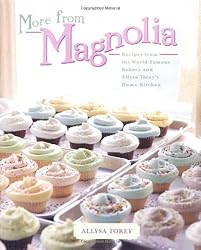
More From Magnolia: Recipes from the World Famous Bakery and Allysa Torey's Home Kitchen Review

More From Magnolia: Recipes from the World Famous Bakery and Allysa Torey's Home Kitchen
Average Reviews:

(More customer reviews)
I'd seen the first Magnolia cookbook in a friend's shelf for awhile now and even though she'd never bake anything from it (she never uses them, just collects them), I'd been wanting to do so for a long time so on a whim, I ordered both books. I just received them two days ago and already I have tried THREE different recipes from this one. Yes, it is a bit much but after the first one, my family begged me (they didn't have to, really) to keep on trying more stuff. Even though I haven't baked extensively from it yet, I'm an avid baker and have the feeling that most of these recipes will turn out amazingly well as they look and sound positively delicious. And well, millions of customers at the bakery can't be wrong, these really are good desserts!
The recipes are varied and all use fairly simple ingredients (no running around for exotic stuff at the last minute). The directions are very simple and almost any level baker will feel totally at ease following them. Add to this that she begins by giving a few really basic pointers (just in case you need a few more moments to familiarize yourself with the kitchen) and you got a very comfortable starting point to a great baking experience.
On the downside, I guess I could've used a few more pictures of the finished products but honestly, the book was good enough to more than earn my 5-star rating. These are simple, home-y, old-fashioned, mostly high-cal desserts that will probaly bring you fond memories of your favorite baker, be it your aunt, grandma or in my case, my mom. A tradition I definitely want to follow in this day of cutting time in favor of convenience. This really helps! An amazing book... a new favorite of mine and one I definitely plan to keep on using.

Click Here to see more reviews about: More From Magnolia: Recipes from the World Famous Bakery and Allysa Torey's Home Kitchen


Buy NowGet 34% OFF

Buy cheap More From Magnolia: Recipes from the World Famous Bakery and Allysa Torey's Home Kitchen now.

The Encyclopedia of Electronic Circuits, Volume 6 Review

The Encyclopedia of Electronic Circuits, Volume 6
Average Reviews:

(More customer reviews)
This is a great reference. It's nice to have a few examples of how someone else has solved a problem before you go into your own design. Of course, you will want to own the complete library. All volumes have a reference in the back that includes previous volumes. This is handy. You only need to use the reference in the last volume you own to find a list of everything.

Click Here to see more reviews about: The Encyclopedia of Electronic Circuits, Volume 6

This book will be sixth volume in Rudy Graf's best-selling series of the Encyclopedia of Electronic Circuits. Volume six will include circuits from manufacturers' application notes developed during the period of late 1992 through early 1995. The all-inclusive references to circutis that have appeared in the previous five volumes.

Buy Now

Buy cheap The Encyclopedia of Electronic Circuits, Volume 6 now.

4/20/2011

Sky High: Irresistible Triple-Layer Cakes Review

Sky High: Irresistible Triple-Layer Cakes
Average Reviews:

(More customer reviews)
The tall layer cakes you see at the bakery always look so impressive sitting on a cake stand or plate and sliced with two layers of filling. Somehow the two-layer cakes I make don't quite stack up (pun intended). But most recipes for the home baker are written for two layer cakes.
This book has recipes to make those fabulously tall, triple-layer cakes. I wouldn't buy it as a first cake cookbook (Rose Levy Beranbaum's "The Cake Bible" or Nick Malgieri's "Perfect Cakes" coes to mind as better beginning cake baking cookbooks), but this book does deserve a place on the shelf if you really enjoy baking cakes and want to make the kind of cakes that will inspire "oohs" and "ahs" when you bring them to the table. There is a great variety of recipes. The recipe categories are: chocolate cakes, vanilla cakes, fruit-flavored cakes; nut and spice cakes; cakes with a world of flavor (e.g. chai, dulce de leche, black forest, blue cornmeal), and finally holiday and special occasion cakes. The last chapter has recipes for three different kinds of wedding cakes that will serve 80-100 people if you feel adventurous and want to bake a wedding cake!
Each cake recipe is followed by the recipe for a frosting and often a different filling that go with it so you don't have to flip to a separate section of the book to find the frosting or filling that will suit the cake you have chosen. The frosting choices and the cake flavors sound amazing. She covers the expected combinations: chocolate cakes with toasted coconut-pecan frosting or different types of chocolate frosting; vanilla cakes with white chocolate, white chocolate buttercream or chocolate frosting; strawberry shortcake; boston cream pie. She pumps up standard cake flavors with more adventurous frosting or filling choices (chocolate cake with peanut butter frosting and chocolate peanut butter glaze, cakes with mango mousse or peach mousse filling, apricot carrot cake; banana cake with praline filling and white chocolate ganache(!); marbled lemon blueberry butter cake. And then she pulls out the stops with cakes I can't wait to try: pina colada cake, maple walnut cake, dulce de leche cake, chocolate hazelnut cake.
The photography is fantastic, bordering on "food porn." There isn't a photo for every cake but more than half of the recipes do have photos and they will make you want to bake those cakes.
If you already do a lot of cake baking, you may be surprised (as I was) by the mixing technique. I was taught the creaming method where you first beat the butter then add the sugar and beat some more until it is fluffy, and finally add the flour and other dry ingredients alternately with the liquid ingredients. Most of the butter cake recipes in this book use the two-stage method where the butter, all the dry ingredients and some of the liquid go into the mixing bowl at the beginning and after this is beaten smooth, the eggs and remaining liquid goes in. I found this so unexpected that, after reading this technique in several of the recipes, I had to go back to the baking techniques section at the beginning of the book to find out why. The author believes "the two-stage method produces a more finely textured cake and is more dependable" than the creaming method. Now that fall is here and my kitchen isn't so hot, I'll be trying these recipes I've been drooling over and will see if I agree.
The trouble is, I've been poring over the pictures and recipes so long, I can't decide which cake to make first! My friends and family may be eating a lot of cake.

Click Here to see more reviews about: Sky High: Irresistible Triple-Layer Cakes

A classic layer cake has always been the best party pleaser, but this cookbook takes dessert to a whole new level. Sky High celebrates the triple-layer cake in all its glorious incarnations with more than 40 decadent and delicious recipes. The wide range of flavors will appeal to anyone with a sweet tooth. The book features such delights as Boston Cream Pie, Mile-High Devil's Food Cake, and Key West Cake. There are even three astonishingly beautiful (and totally do-able) wedding cakes! From luscious chocolate creations to drizzled caramel confections, take simple layer cakes to new heights with Sky High.

Buy NowGet 34% OFF

Buy cheap Sky High: Irresistible Triple-Layer Cakes now.

4/19/2011

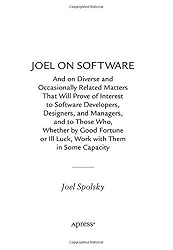
Joel on Software: And on Diverse and Occasionally Related Matters That Will Prove of Interest to Software Developers, Designers, and Managers, and to Those Who, Whether by Good Fortune or Ill Luck, Work with Them in Some Capacity Review

Joel on Software: And on Diverse and Occasionally Related Matters That Will Prove of Interest to Software Developers, Designers, and Managers, and to Those Who, Whether by Good Fortune or Ill Luck, Work with Them in Some Capacity
Average Reviews:

(More customer reviews)
There is a fair bit of hard-won wisdom here. It covers every aspect of the programming world, from praise of hardware, through product management and economics, back to testing and coding style, and on and on. There are a few real gems among these 45 essays (plus intro and appendix), untrammeled by the need for consistency. He's certainly unabashed about bucking current fashions, including all the silliness seen under the revival tent of the eXtremists.
At several points, Joel rails against the false economies of making code smaller and sniggers at the people to whom it matters so much, then (ch 39) he rails against the size of a Microsoft runtime support package. He also points out that antialiased fonts, other than things like headlines, are a bad idea. That was already common knowledge around DEC by about 1980, since the visibly blurred margins of characters led to eyestrain as the focussing muscles fruitlessly tried to find the edge. Modern display technology with far smaller pixel sizes seems to have reversed that decision, however, except possibly at the smallest character sizes - a blow-up of a screen capture will often show antialiasing on body text that looks quite good. If he came on a bit less strong to start with, these annoyances would be a lot less annying.
Joel's incredibly high opinion of Joel wore on me after a while. Despite all the good in this book, I had to drag myself through the last half of his pontifications, repetition, and tendency towards the absolute. If you're already a fan of his other writing, that might not bother you. For me, Joel, in his role as high priest in the cult of Joel, became tiresome. I'm sure he's a skilled developer and savvy business man, but I really don't think I'd enjoy meeting him.
//wiredweird

Click Here to see more reviews about: Joel on Software: And on Diverse and Occasionally Related Matters That Will Prove of Interest to Software Developers, Designers, and Managers, and to Those Who, Whether by Good Fortune or Ill Luck, Work with Them in Some Capacity

Spolsky is knowledgeable, funny and free of unnecessary religious fervor. Joel on Software is a must-read....having (Joel on Software) in one place, edited, with an index, is probably the best twenty-five dollars you'll spend this year.
— Greg Wilson, Dr.(Joel Spolsky's) genuine desire to make the software world a better place keeps us coming back for more.
— Bruce Hadley, softwareCEO.This book will challenge, encourage, upset, and entertain you.Spolsky knows his stuff, and he's got the war wounds to prove it.This book is worth the price of admission...
— Tom Duff, Duffbert's Random Musings
An entertaining oportunity to get to know one of today's most influential developer/authors.Spolsky based these observations on years of personal experience.
The result just a handful of years later? Spolsky's technical knowledge, caustic wit, and extraordinary writing skills have earned him status as a programming guru! His blog has become renowned throughout the programming world&emdash;now linked to more than six hundred websites and translated into over thirty languages.
Joel on Software covers every conceivable aspect of software programming&emdash;from the best way to write code, to the best way to design an office in which to write code! All programmers, all people who want to enhance their knowledge of programmers, and all who are trying to manage programmers will surely relate to Joel's musings.

Buy NowGet 15% OFF

Buy cheap Joel on Software: And on Diverse and Occasionally Related Matters That Will Prove of Interest to Software Developers, Designers, and Managers, and to Those Who, Whether by Good Fortune or Ill Luck, Work with Them in Some Capacity now.